Hi there !
As you discuss the Hermod, I wanted to jump in to say that it can do a few more things on top of midi to cv conversion ;)
IMO, it's a beast that can do a lot in a rack, and when I started with a smaller setup, it proved really useful as:
- lfo
- step modulation sequencer/recorder
- euclidian sequences
- random sequences
Biggest downside for me is the limited CV inputs, but I learned to live with it - the modmatrix helps with that. I also read a lot of complaints about the fact that entering notes with the small screen and the single encoder can be a hassle but if you connect any type of midi keyboard to it, it's a breeze (also works with Push sending note info to Hermod through Ableton, if you have that).
And indeed, as you already noted, because the Hermod+ came out, a lot of people (including me, hehe) are selling their Hermod v1 for relatively cheap, making it particularly good value for the money at the moment.
For your other questions, because I 100% agree with Larsech that modular is what you make of it and only you can decide what makes it interesting, I would be tempted to ask question n°1 back at you :-) Does it look useful/fun/playable enough to you ? Marbles if fantastic IMO, but it didn't make my rack because I prefer going about other ways, the question here is will you get what you want from it ? I'd suggest playing with it in VCV and decide for yourself, I think all the Mutable modules are all in the VCV free library (Marbles is Random Sampler by Audible Instruments for example), and playing inside VCV can teach you a lot about what feels fun to you in terms of patching, all for free.
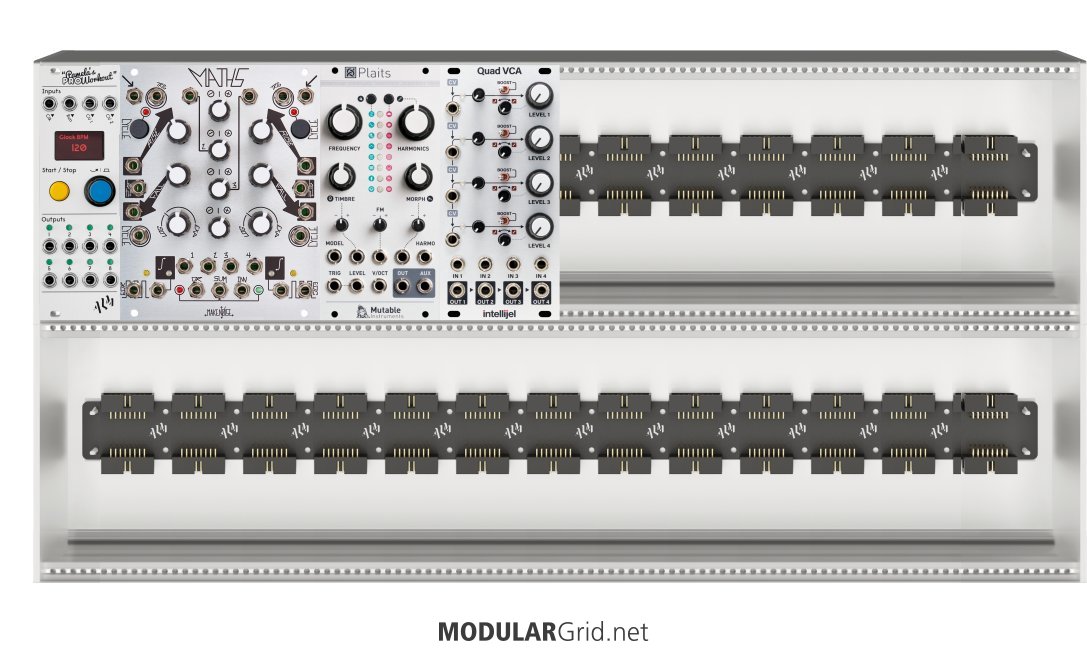
As for your buying sequence, Plaits + Maths + Quad VCA is the barebones version, it will make sound and give you space to explore for a while. Then you can add Hermod if you want to have immediate midi connectivity and loads of other tools and Polaris if you'd like a filter in the rack (you can always use a VST one after your modular when you start if funds are really limited, I guess). I mention the 3 modules version with Plaits + Maths + Quad VCA (or even with Polaris before Hermod) because I think it can also be an interesting creative challenge to learn the modules and have fun while also spending less, I mean Maths is highly praised for good reasons and so is Plaits... My guess is that by the time you have your first 5 modules and have played with them, you'll probably have a good idea of what feels right next...
One last piece of advice, if I may, it's one I hope you've already seen elsewhere but it's very valuable so here it goes again: go slow, keep doing loads of research and learn the modules you already in depth before deciding to buy more. It will save you hard earned money, and make you a better musician with your instrument in my humble opinion. If you think about it, not being able to afford a full rack from the start may be a blessing in disguise ;-)
Hope this helped !
D.
--- Voltage control all the things ---