Thread: A Turing Machine in Ableton Live
Augur with VCV Rack


This one is under the hood, but a necessary preparation for upcoming AI bot spam.
We now have an internal scoring system.
This means that new users can no longer add or modify public modules.
They can still upload private modules for their own use.
They cannot post in forums or create offers.
I am sure there will be issues, so if anyone thinks the system is too restrictive, PM me.
Beep, Bopp, Bleep: info@modulargrid.net


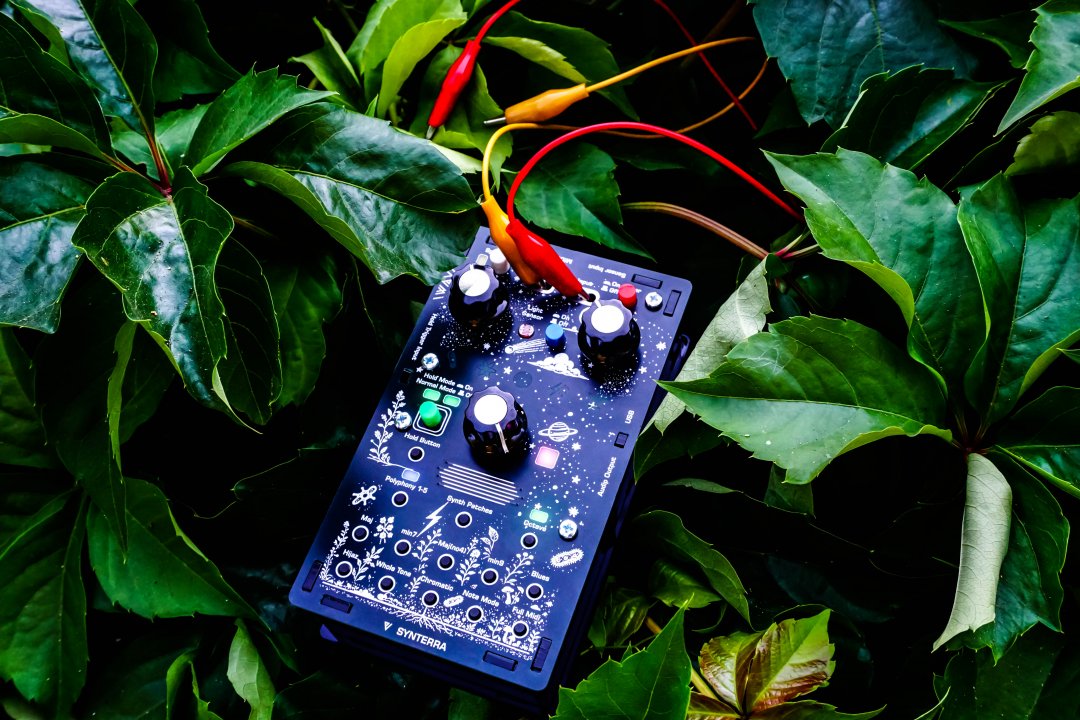
Synterra, our new instrument that many of you have been waiting for, is now available for pre-order.
Synterra is a generative synthesizer that transforms magnetic and electrical field variations, light, plants, mushrooms, fruits, organic materials, and touch into music.
With 8 selectable scales, probability and quantizer structures, it converts environmental data into constantly evolving melodies. It features 9 different synth engines, including subtractive, wavetable, resonator, Karplus-Strong, drum, and noise-based synthesis.
Synterra can send MIDI via USB and MIDI OUT, while MIDI IN allows you to control its scale and harmonic structure externally. Use it as a generative instrument or play it directly as a standalone synthesizer via MIDI.
Powered by either battery or USB, Synterra is designed for creative music-making in the studio, on stage, or out in nature.
Pre-orders are available with a 17% discount, and the first units will begin shipping in September.
Demo videos, technical information, and more details are available on our website and social media channels.
If you’re in Istanbul, you can book an appointment and experience Synterra at the VAEMI Studio.
Synth Anatomy:
https://synthanatomy.com/2026/08/vaemi-synterra-synthesizer-transforms-your-surroundings-into-musical-soundscapes.html
Website:
https://www.vaemi.net/product-page/synterra-bio-interactive-generative-synthesizer?currency=USD
Youtube Demo Video:



I found these in a box. Unobtainium, unopened. Yay!
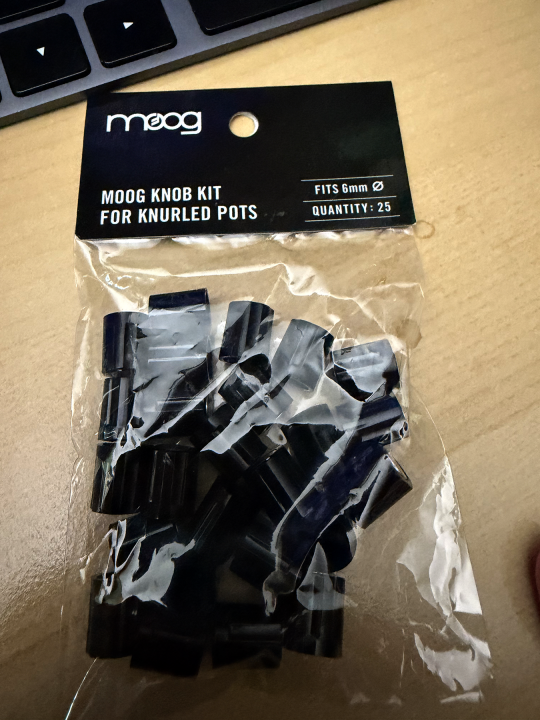
They work so nice on Doepfer pot stalks. Perfect.
Should I sell 'em, hang on to 'em, or use 'em?
--

Swapped modules with @metronom and as their name suggests, they were timely and reliable.
Highly recommended user.

Obviously I have to say.... but they grow up so fast!
Enjoy your spare HP, don't rush to fill every last space, this is not like filling sticker books. Resist the urge to 'complete' your rack, its never complete so just relax.

thank you for your welcoming and for your useful input!!
will try soon.
cheers!!

I would much prefer the Intellijel µVCF, as
A resonant filter with a pitch decay envelope into FM and an amplitude envelope after the Filter Out is a great simple percussion sound. On deep cut-off it's a kick, half-way with some noise in the other FM it's a snare, and pitched very high with noise it's hi hats.
Here's a video on how to get some other shapes out of it
Thank you for the insights and feedback. Much welcome! I have this tendency to get stuck when it comes to the last pieces. An extra filter is a very good point and i think i'll go for https://modulargrid.net/e/intellijel-%C2%B5vcf (if i manage to get a hold on one) or https://modulargrid.net/e/doepfer-a-121-3 as well as one or two https://modulargrid.net/e/intellijel-buff-mult (already got a built in buff mult in https://www.endorphin.es/modules/p/2hp-power) depending on what filter choose.
(And yes, intellijel fanboy over here).

Another scammer on this marketplace. Received money and went quiet.
https://modulargrid.net/e/users/view/145859
@dedeck
Appears on Watsapp as Alexander Meier
@modulargrid can you please remove them to help others in not falling for it. A comments section in the feedback would be very helpful.

I just read this about sugarfreedaddy. That's crazy! I had great experience with him, but he sold a new module for way lower than it's worth. My guess is he might have had a way to steal them / get them for extra cheap?
Did anyone receive their modules or money after these messages?
Hi guys,
unfortunatelly, I have similar experience with @sugarfreedaddy. First, smooth communication, then I payed for the module (3.4.) and since then no communication at all. Tried to write him everywhere I could (MG, email, IG), but no response. Now I see his MG accound has been suspended.
This is interesting, since I have read in this forum, that several trades were made with this guy, and some of them appeared to be flawless, and he has also quite positive feedback. I hope this is only some kind of misunderstanding.
Cheers and happy patching to everyone.
-- ocze
Hi ambientvalent,
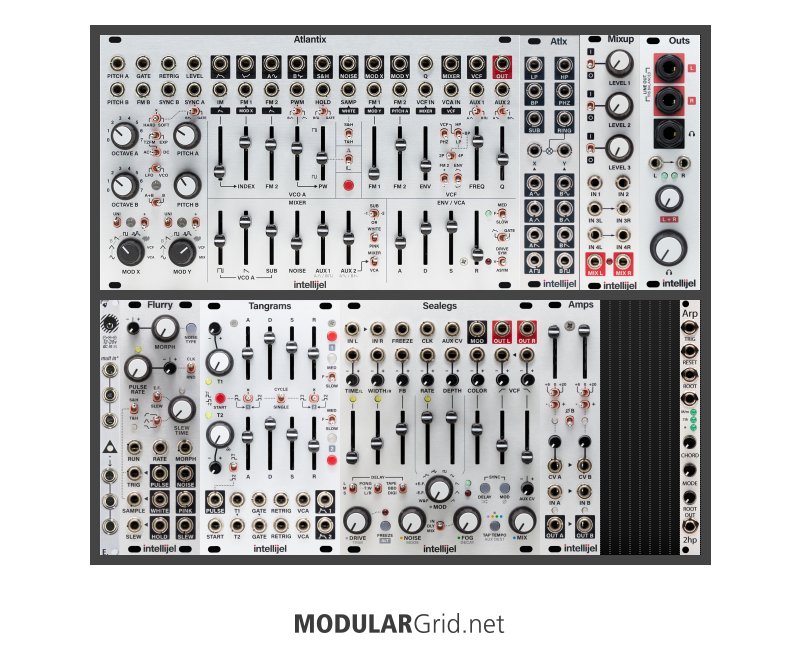
If you post the link to the rack and not have it on private, it will show up on the forum as an image and interactive, so that we can see the module descriptions.
For simple attenuators you can use the Mixup and Amps modules that you currently have.
I think that if I owned this and wanted to make ambient, I would either add a second oscillator with a different flavour, or a second filter. You have a lot of nice utilities that have more 'modulation outs' available than you need for just the Atlantix. Most (self-oscillating) filters and oscillators can be slowed down far enough to work as LFOs as well.
Atlantix has two oscillators, a second oscillator module could complete a 3-voice chord. Or use it on it's own when you don't feel like Atlantix for a day. For different flavour oscillators you may think about:
- ALM MCO2, it has digital libraries like wavetable and physical modeling and a built-in filter and envelope and is only 6 HP. Most of its controls are in menus though.
- Famous Plaits in a 6HP clone version, has digital libraries and a low-pass gate. No real filter and there's only one filter in your system so far.
A second filter can be used on the second oscillator of the Atlantix, or use the Atlantix filter and the second filter in series or parallel. I would either choose something that can also track 1v/oct and self-oscillate so that you can use it as an oscillator+lfo, or maybe an Oberheim style state variable filter (which will traditionally not self-oscillate) as it can move between filter types fluidly, great for ambient.
If you stick to 6 HP, you can use that last 2 HP to get an extra utility of your choice in.
Hope that helps, good luck!
Really nice.
Maybe add two or three Buff Mults to share those hard won signals.
As long as you're using the Arp, a 2hp Euclid always brings cheap thrills.
--
Hi,
This is my recently assembled little rack. Using it mainly for ambient and more musical arps. Any suggestions for additional modules? Plan is to add more modulation, like some quad lfo or so. And attenuetors.

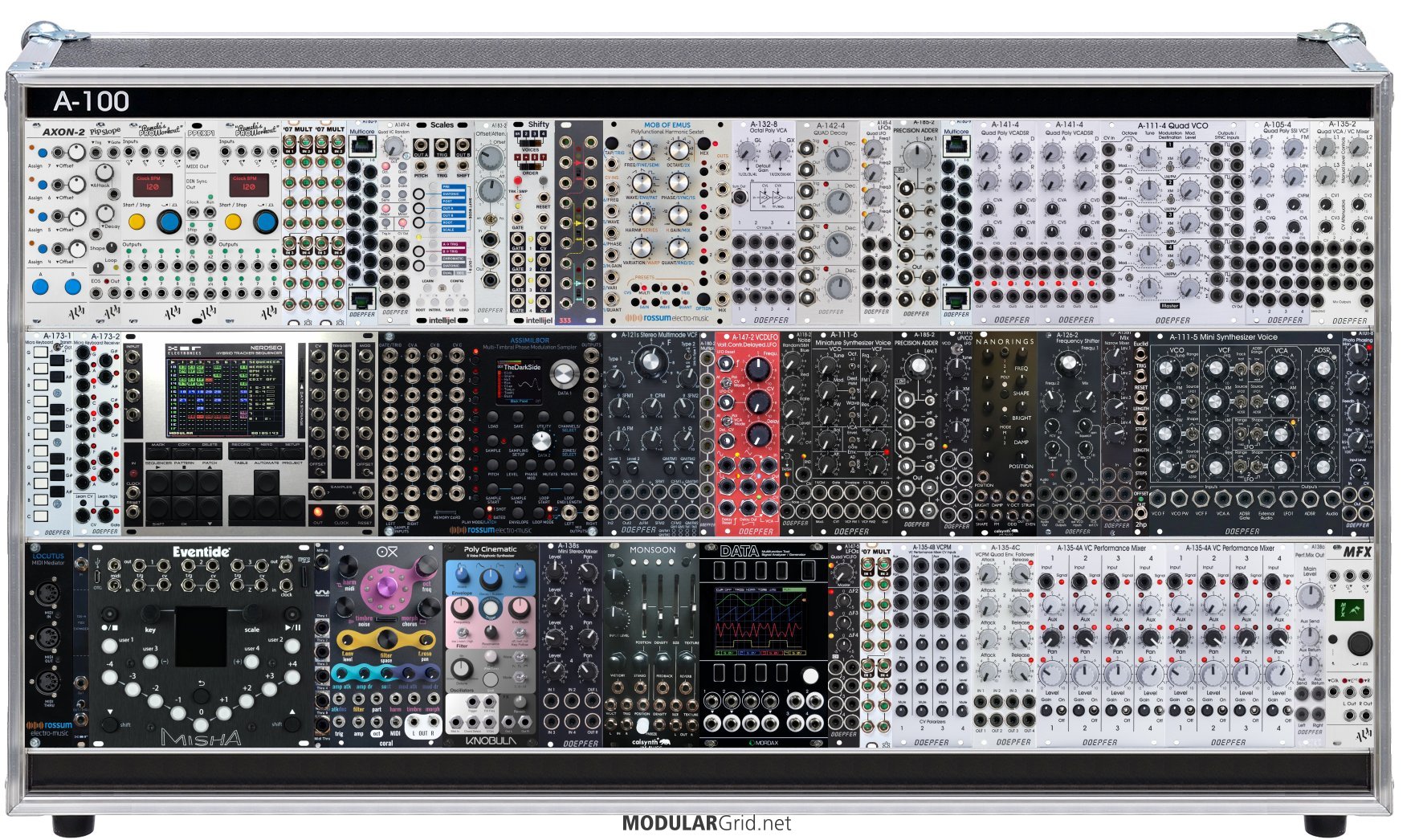
The main modular. Planning took forever. Lots to test. So far, yikes it sounds big.
I tried to keep the most typical connections to be close enough for the Little Yellow Wires.
I'm using a Deftaudio midi hub down next to the Misha, but MG doesn't have their listing.
Note use of the two Doepfer A-180-9 Multicores. The cool thing is that you can use two ribbon cables and connect them from the back.
That gets 14 lines from the note clocks on the left over to the voice modules on the other side, without draping a dozen wires across the box.
The 'ethernet' connectors still work for connecting other synths.
I have to go back and study the Misha and Nerdseq manuals a bunch more.
Hopefully someday I can tame that Mob of Emus. They are always ornery.

--

Hello there,
I have an issue with "lihuelsosa", i sent him 350e for two modules, we discuss on whatsapp and i paid via Paypal and the guy didn't answer me anymore.
He said that he received the paiement and he'll post it today (it was yesterday), and still no news. I tried to call him, but he blocked me.
I checked his profil and i saw one positive feedback by a user, so i contacted him (pisrecords) to know how was his experience,
but no answer ...
So be aware of him ! I'm waiting for an answer before asking for more reasearch about him (i have a policeman close to my family)

Why it's impossible to find Bitbox MK2 from the searcher? There are only Bitbox MK1 and micro listed.

hi Frederico
thanks for answering here.
Shit happens, for all of us. i was a little scarry of your long silence but i know everyone can have issues.
I'm happy to read everything is now good for you guys
cheers
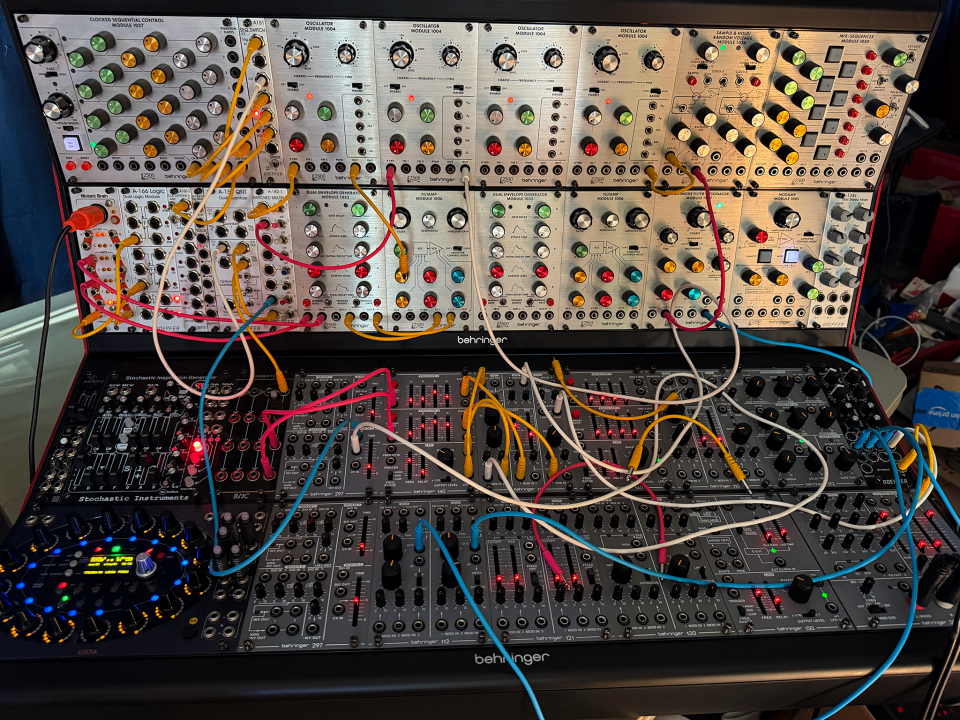
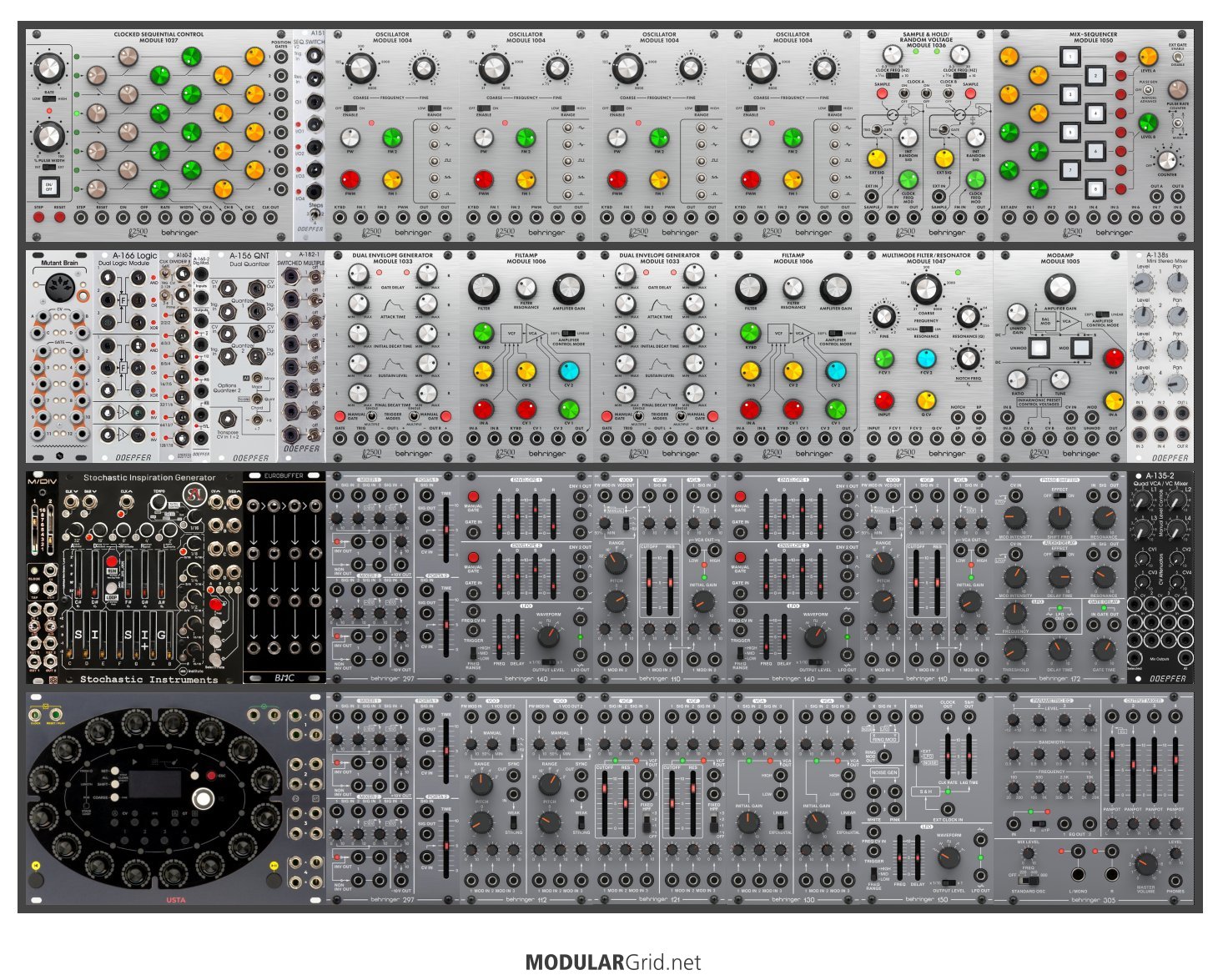
This build is more 'play notes' oriented than 'funny noise' oriented, with lots of sequencing and step counting from the left side.
Turned out nice, and formidable too. Stereo four voice polyphonic, and eight parts is a stretch, but possible.
Sounds great so far and it even stays in tune with itself, mostly.
The GO cases and internals are pretty good, plasticy but sturdy enough. Their joining bracket is a little wonky.
The joined pair is solid, but in no way road worthy, and the whole thing is way heavier than it seems.
Despite it all being Behringer, the ARP side sounds distinctly different from the Roland side.
Glass-ey vs. woody maybe? The 2500 modules also tend to have way wider output ranges than the System-100M Series stuff.
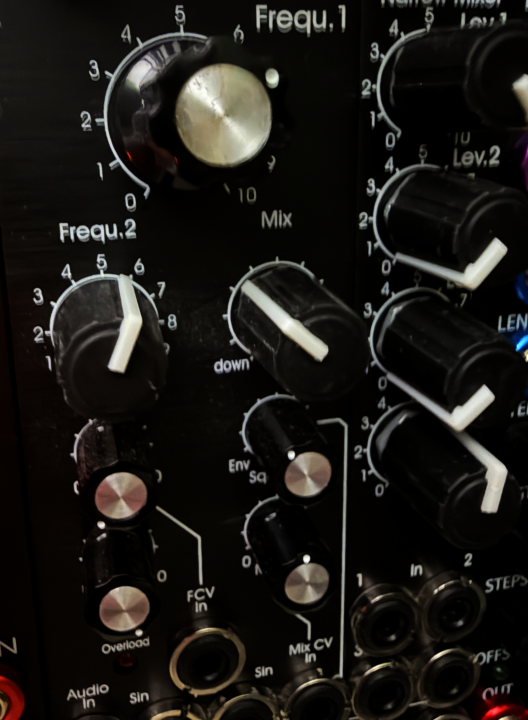
I count 81(?!) pot shafts sticking up from the System-100M modules.
They all really deserve knobs. Feels unfinished. Ick.
Still testing and learning what it can do.
No video, but I thought I could share a picture of it.
Fun.
Questions?
--

my order has been shipped this morning.
拾拾
-- pi-r
We sincerely apologize for any inconvenience which might have occurred, this has been an exceptional time we had to harness and deal with.
We are writing to any of you experiencing any miscommunication or trouble to apologize and set compensation measures.
Bests
Federico from Morph
Federico De Lellis is a computer scientist and experimenter in the musical field who applies technology to sound by combining the worlds of traditional instruments with electroacoustic music under the artist name Yalu.

@FNF
Hi Marius, you can add them yourself if you have contributor rights. Just use clear, front-facing panel images, enter the correct specs (HP, depth, power), and double-check everything before submitting.

it would be great to have a "cancel” (X) in Manufacturer search box
-- bitstreamWe have that now!
-- modulargrid
excellent!! thanks!!!

Hi there,
Same kind of issue with germainp here. I bought him a Mimeophon on the 18th of July. 310 € including all fees. He told me he received the payement, and I have no news from him since then. I sent him e-mails several times without any reply. I'm glad I opted for a PayPal payement with purchase protection. He wanted me to use F&F but I refused. I just declared a dispute via PayPal today.


Yep germainip is a scammer. 2nd time I have been scammed with a 200€ Pamela's Pro Workout so might be the same guy as last time. Stay vigilant.

WARNING - RED FLAG - germainp
Hello,
just a small warning about the user germainp .
he is selling several well known modules ( morphagen, mimeophon,...)
he got zero feedback here.
he showed me feedback from another website ( guitarrista) where he got good feedback ( but nothing since 2022)
he showed me pictures of module. it was not AI
i paid, he confirmed he received the money.
msg were quite instantly (max 12h latency until payment )
but after payment, no news since 5 days now .
https://modulargrid.net/e/users/view/135246
i'll delete / modify this msg once i have any news.
THanks
EDIT: it seems the user aslak1 has been scammed by him.
Hi Ferran
I'll be really happy if you can. I give you my mail in PM

Hi,
Yes, Yalu is my colleague from the Barcelona Modular Society.
I'm going to see him this Saturday at our event. Do you want me to pass on a message to him?
Best Regards,
Ferran

Hi
anyone has experience whith them ?
i order from their website on july 2 and never has a return
I try to contact them by mail and facebook but no answer too
You can upload new modules here:
https://modulargrid.net/e/modules/add
If in doubt keep them for yourself, there is a checkbox for that.
Beep, Bopp, Bleep: info@modulargrid.net

Hi all,
Seriously tempted to put an Endorphines Ghost in a pod 32 as a compact effects unit. Still not 100 sold on the sound yet and would like to be convinced otherwise. How do you rate it? Seems to pack a lot in a small space, and nicely flexible, but possibly a bit cluttered for live playing.
Appreciate any thoughts.

So I have come across some modules that I can not find here.. just as an example someone was recomending me a Behringer 304 Mixer (I think it was), but I did not find it, or that exact model with the current panel. I also got a module: the Pianist from NOH Modular with a original white panes, even though it is a limited edition.. (not sure how limited) but anyway.. my question would be:
Can I personally add modules I can not find? Or add custom or different panels as long as they are existing? Or do I have to notify the ModularGrid staff and they will take care of it when they someday can?
If I can do it, how? Is there any special guide lines? How to add (probably png) and such.. I have searched but did not find any thing.. but I might have searched wrong, relatively new here. :-)
Any tips?
Best regards Marius
it would be great to have a "cancel” (X) in Manufacturer search box
-- bitstream
We have that now!
Beep, Bopp, Bleep: info@modulargrid.net
it would be great to have a "cancel” (X) in Manufacturer search box (just like in the Name search box) instead of having to scroll all the way back to the top. Or am I missing some shortcut?
-- bitstreamWhen the manufacturer dropdown is focused, you can simply press ‘-’ on your keyboard to reset the selection. You can also type any other letter to jump to a manufacturer. This is a standard browser feature that should work on other websites as well.
-- modulargrid
I can't get the keyboard to appear on my iPhone when the manufacturee dropdown is focused.
it would be great to have a "cancel” (X) in Manufacturer search box (just like in the Name search box) instead of having to scroll all the way back to the top. Or am I missing some shortcut?
-- bitstream
When the manufacturer dropdown is focused, you can simply press ‘-’ on your keyboard to reset the selection. You can also type any other letter to jump to a manufacturer. This is a standard browser feature that should work on other websites as well.
Beep, Bopp, Bleep: info@modulargrid.net

Hello and welcome.
An envelope follower is useful for getting a CV source from an audio input. Say you plug a guitar into your Instrument Interface, every time you pluck a string an envelope is generated, either positive or negative. You might want to use that negative envelope to lower the wet/dry of your effects so you can hear each note clearly followed by a blooming reverb or something. I often use the negative envelope generated by a kick drum to "duck" my bassline so the bass remains a little clearer. Or maybe you want to get an auto-wah effect by using the positive envelope to open a filter that your guitar is going into. Those are a few uses of an envelope follower.
Have fun!
it would be great to have a "cancel” (X) in Manufacturer search box (just like in the Name search box) instead of having to scroll all the way back to the top. Or am I missing some shortcut?

I read line in/ line out on the panel. how is this thought for eurorack?
-- Musicaespressiva2
It's designed to fit in a 3U Eurorack row. There's multiple instances on the site of someone or some company adapting a desktop unit to fit in a Eurorack case, presumably so that the user doesn't have to take up extra room putting the desktop unit somewhere separate, or so that they don't have to have multiple power supplies and worry about a separate box. It's eurorack mainly for the sake of convenience.

I read line in/ line out on the panel. how is this thought for eurorack?
I deleted 600+ bot profiles that created racks only to link them to sketchy website. All those racks are gone too.
A serious setback for the Philippine escort scene and Dutch scam casinos.
There is a button on the bottom of the rackkommend stat table to copy the table in markdown format to the copy buffer.
Reddit r/modular will not be the same anymore.
Beep, Bopp, Bleep: info@modulargrid.net


Fractaos version 1.5 is now available.
This update adds five new percussion curves: Kick, Tom, Hi-Hat, Snare, and Cymbal. Each has its own character and can be made more unstable using the Chaos and Depth parameters.
This makes it possible to create relatively regular percussion sounds, as well as hits that evolve, become distorted, or vary slightly with each trigger.
Version 1.5 also brings several improvements:
• Direct access to presets using the PREV button.
• Direct access to MULTI mode using the NEXT button.
• Extended envelope times: up to 8 seconds for Attack and Decay, and 12 seconds for Release.
• More responsive envelope controls and preset recall.
• LIVE track volume can now be adjusted in MULTI mode.
The update and the new user manual are available on the Kaona website.
Thank you for your feedback, which continues to help Fractaos evolve!
Gilles from Kaona