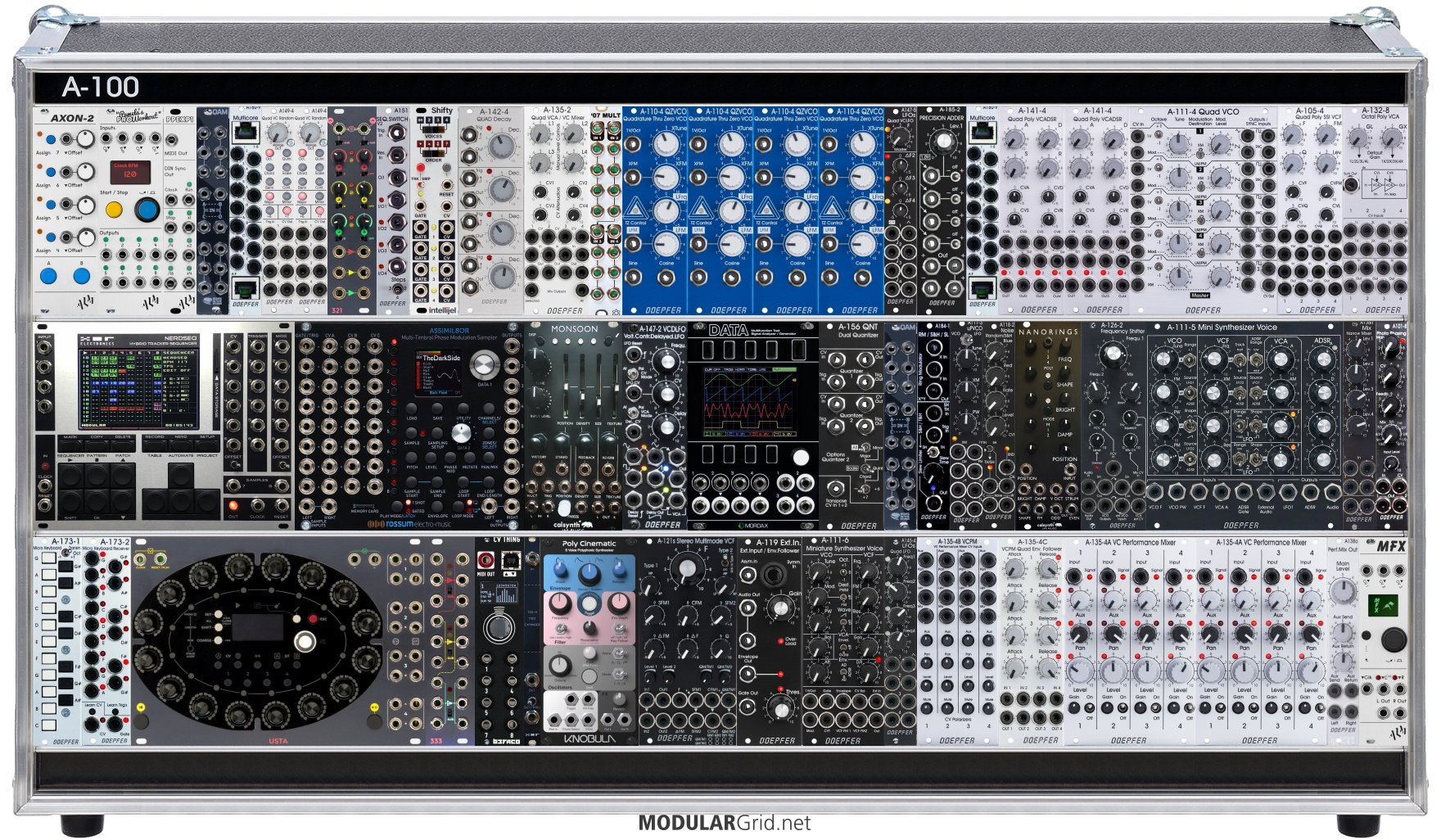
Thread: Moog knob kit
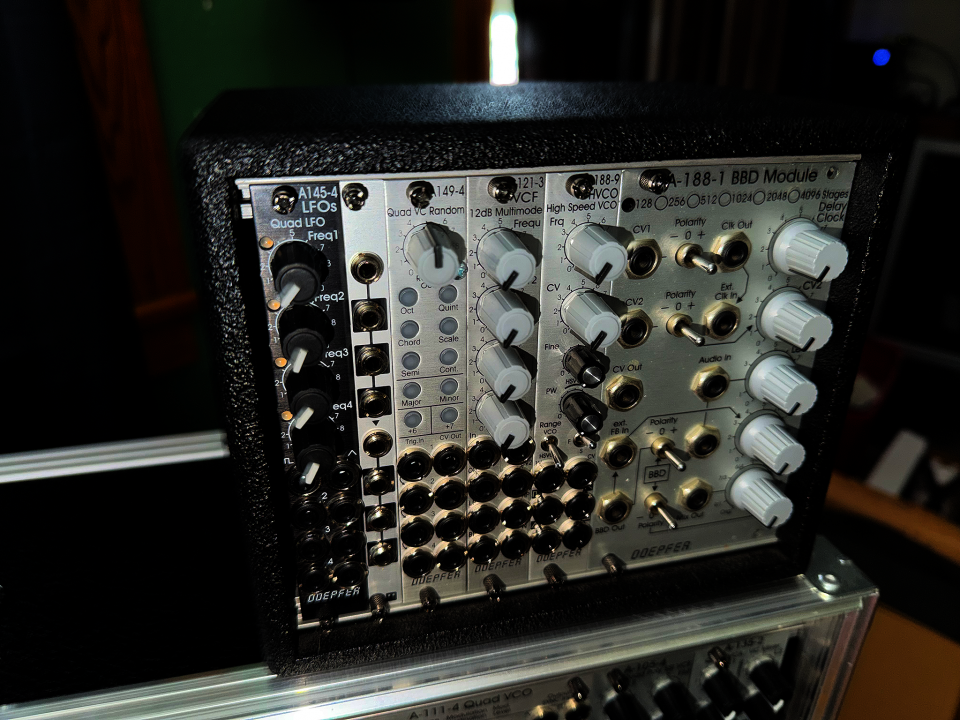
I found these in a box. Unobtainium, unopened. Yay!
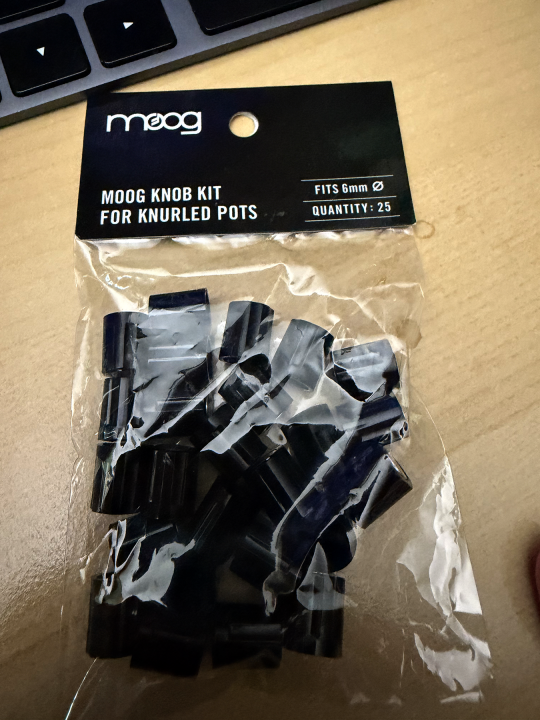
They work so nice on Doepfer pot stalks. Perfect.
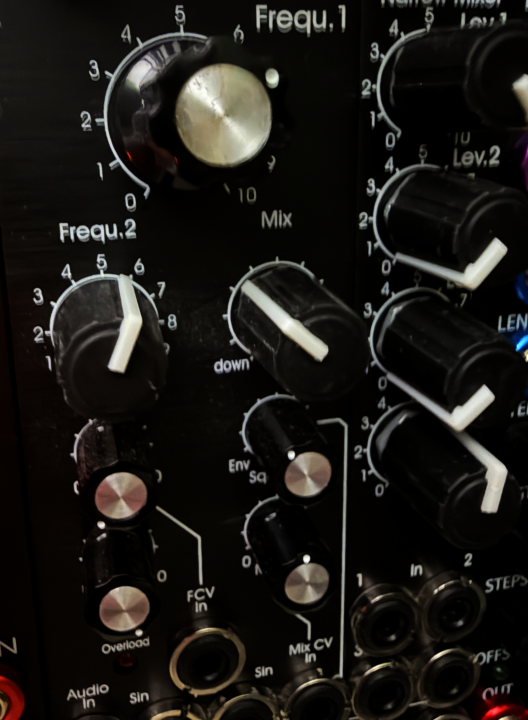
Should I sell 'em, hang on to 'em, or use 'em?
--


I found these in a box. Unobtainium, unopened. Yay!
They work so nice on Doepfer pot stalks. Perfect.
Should I sell 'em, hang on to 'em, or use 'em?
--
Really nice.
Maybe add two or three Buff Mults to share those hard won signals.
As long as you're using the Arp, a 2hp Euclid always brings cheap thrills.
--
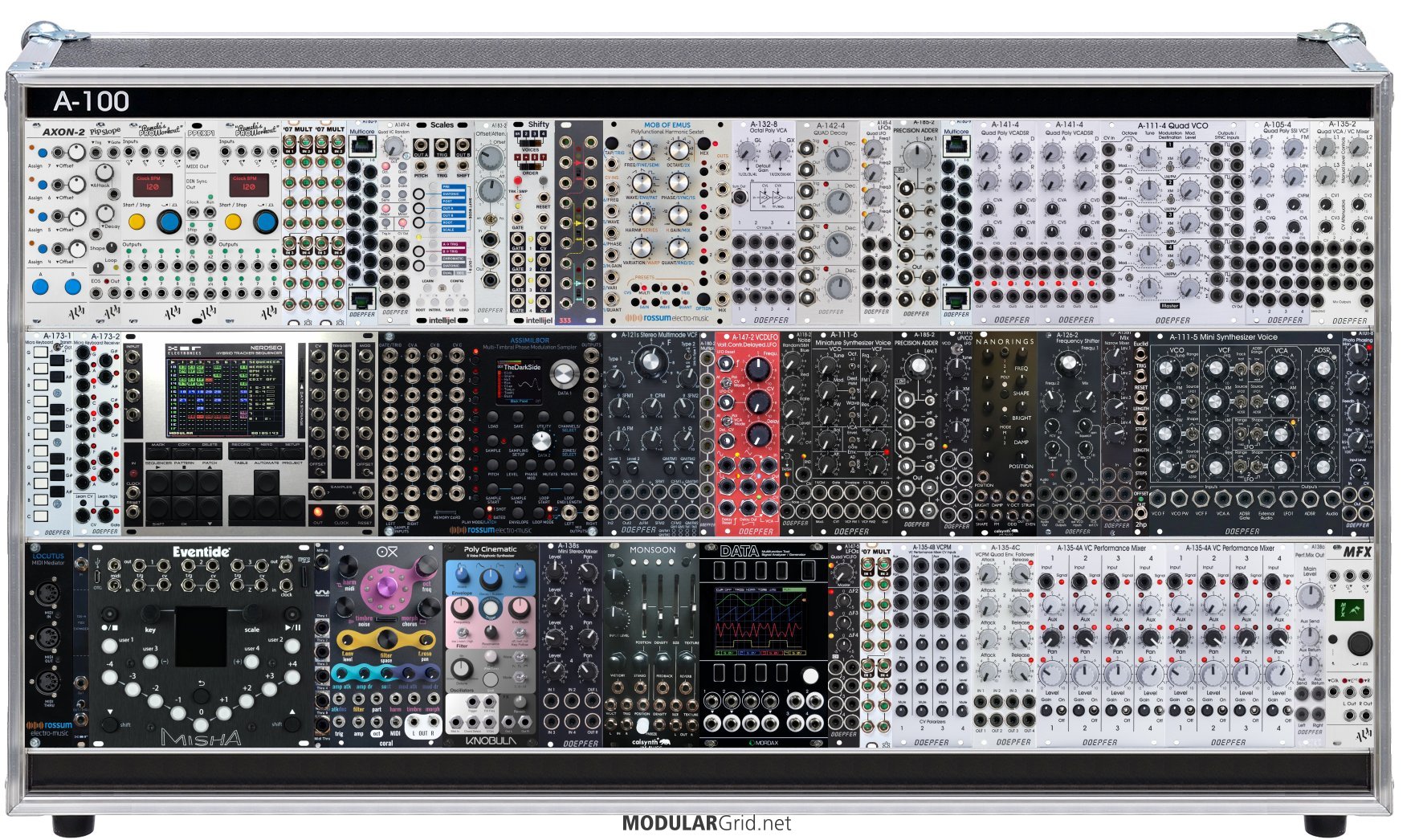
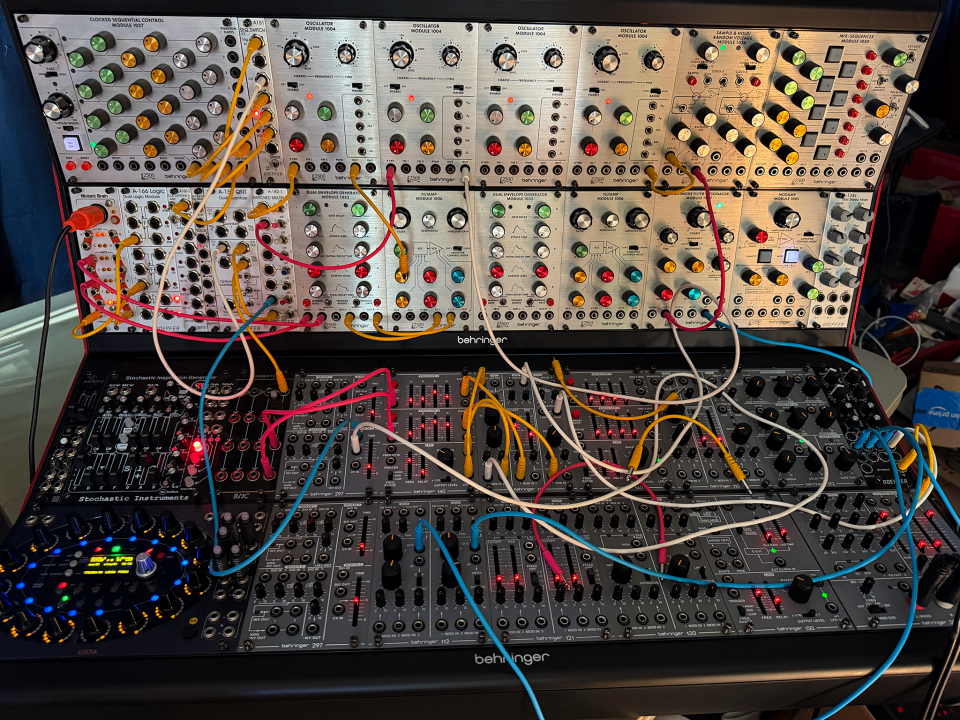
The main modular. Planning took forever. Lots to test. So far, yikes it sounds big.
I tried to keep the most typical connections to be close enough for the Little Yellow Wires.
I'm using a Deftaudio midi hub down next to the Misha, but MG doesn't have their listing.
Note use of the two Doepfer A-180-9 Multicores. The cool thing is that you can use two ribbon cables and connect them from the back.
That gets 14 lines from the note clocks on the left over to the voice modules on the other side, without draping a dozen wires across the box.
The 'ethernet' connectors still work for connecting other synths.
I have to go back and study the Misha and Nerdseq manuals a bunch more.
Hopefully someday I can tame that Mob of Emus. They are always ornery.

--
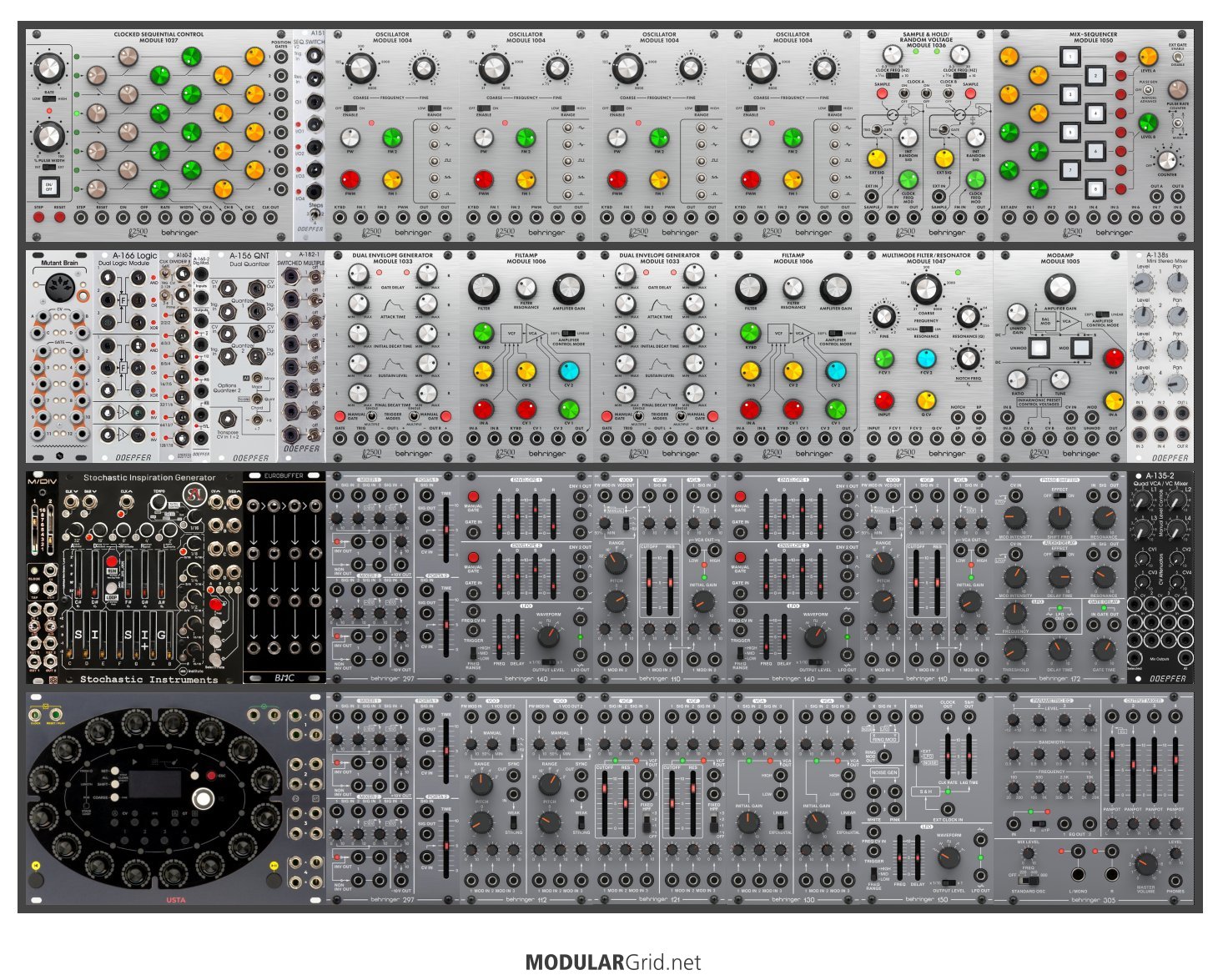
This build is more 'play notes' oriented than 'funny noise' oriented, with lots of sequencing and step counting from the left side.
Turned out nice, and formidable too. Stereo four voice polyphonic, and eight parts is a stretch, but possible.
Sounds great so far and it even stays in tune with itself, mostly.
The GO cases and internals are pretty good, plasticy but sturdy enough. Their joining bracket is a little wonky.
The joined pair is solid, but in no way road worthy, and the whole thing is way heavier than it seems.
Despite it all being Behringer, the ARP side sounds distinctly different from the Roland side.
Glass-ey vs. woody maybe? The 2500 modules also tend to have way wider output ranges than the System-100M Series stuff.
I count 81(?!) pot shafts sticking up from the System-100M modules.
They all really deserve knobs. Feels unfinished. Ick.
Still testing and learning what it can do.
No video, but I thought I could share a picture of it.
Fun.
Questions?
--
Needs a master clock to feed the sequencer, dividers, and pachinko,
and active multiples to feed those note CVs to more than one module.
Kind of weak on LFOs, and Typhoon reaaly likes modulation.
Maybe give up one of those Plaits?
As cool as that sequencer is, it takes a big bite, but just the seq* running the synth voice,
and maybe that into the typhoon, just that, is a perfect to learn where you might want to go.
You can do a lot with just those pieces (and power)..
*but I'll bet you'll want a quantizer soon....
--
too many modules, close to the limit, and it got hot
or
it got hot
or
it's broken
pull your modules, the power supply might be risky now,
and measure the three voltages with a scope/meter, then you'll know what's next
there's a possibility of a bad module pulling down power or a ribbon cable short too,
but i'd check the +12 -12 and +5, and avoid debugging by swapping things around too much
--
I always like a master system clock with a feedback path, like a Pam's with an Axon-2.
Some meter/scope would be useful.
There's a lot of complex waveforms being generated, for flying in the blind.
--
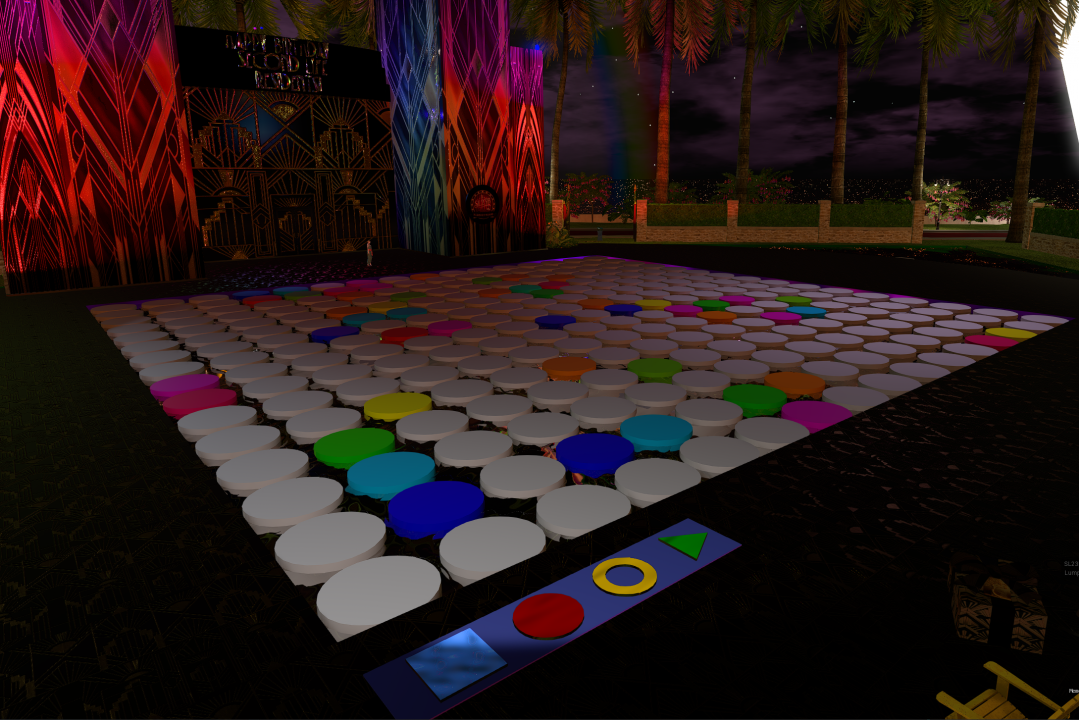
Well, this is different.
Second Life is still around?
It is! For 23 years, which is a long time for any online thing.
This is for their annual birthday celebration, so this year, it's SL23B.
People get together, get a plot to build on, and make something new in about a week.
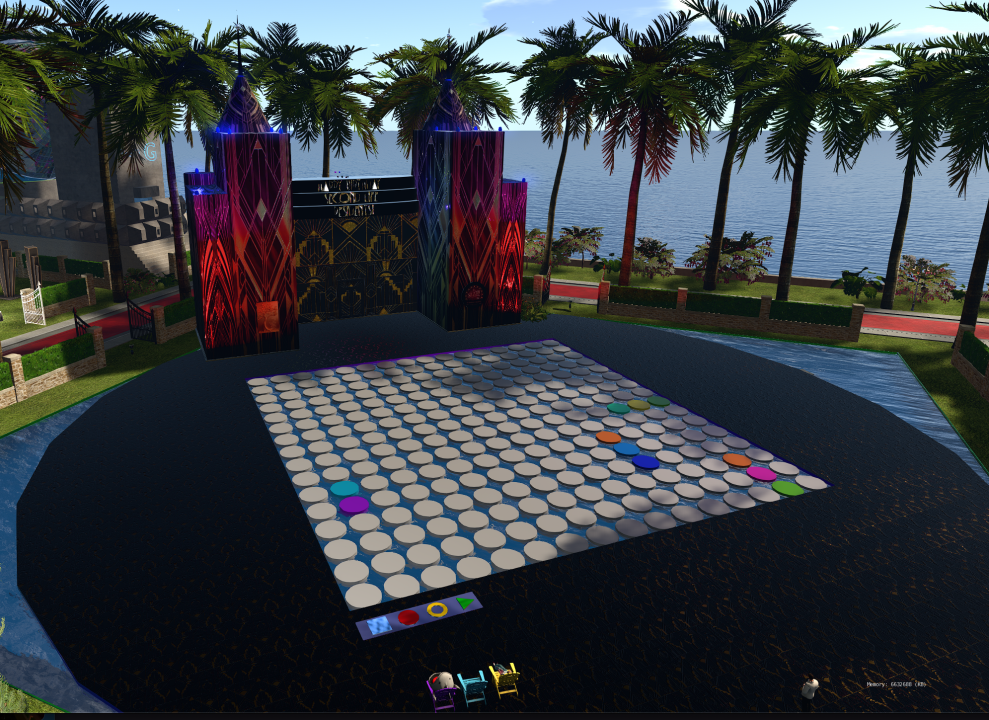
We built an interactive synth, with the sequencer based on JohnConway's Game of Life.
It took around 2,000 of LSL scripting language. I am tired, but it sounds really nice.
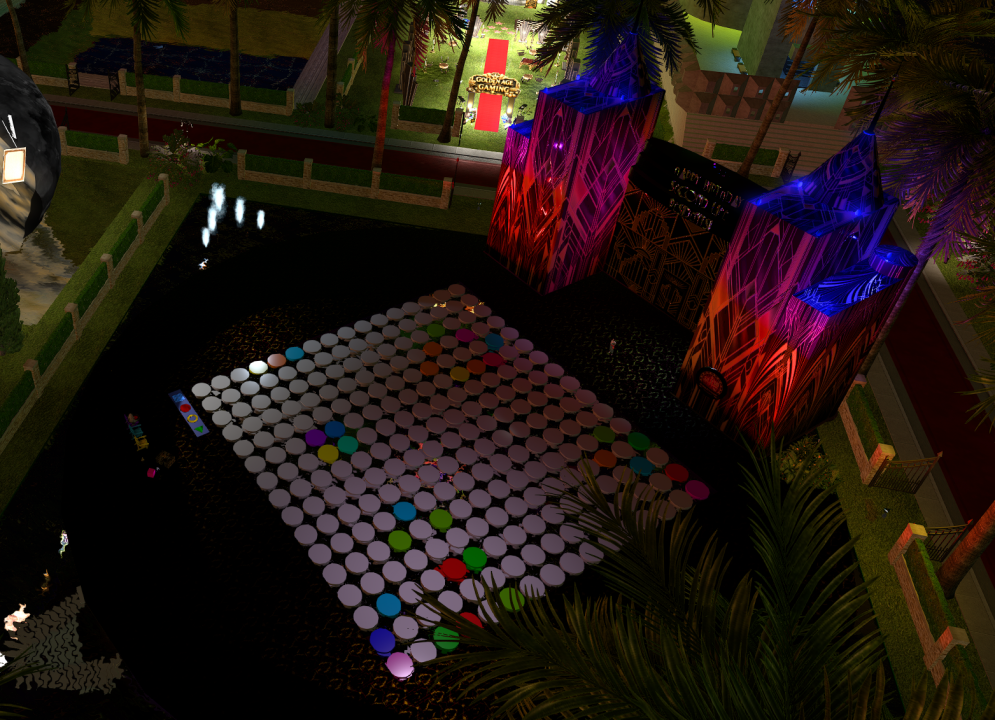
SL23B opens in a week and runs for a month. Come find us and play it, we're in the 'Spectacular' simulator.
--
That 4x4 mixer doesn't seem worth the space. There's better ways to do most of that.
Add as many active multiples as you can stand to spread those expensive-to-generate signals around, accuratly.
I like the MST '07 Buffered Multiple and the Rides in the Storm QAM.
Another boring module is the lowly offset/attenuator.
The Doepfer A-183-2 is a simple, clean one channel 4hp one.
The Frap Tools 321 is a nicer 3 channel one in 6hp
The Frap Tools 333 Sum and Distribution lets you transpose and wobble 3 channels of note CVs, and more, in tune.
These utility modules are the glue that unifies everthing you have into a systemic whole.
--
Dieter chose some intereting modules to start with.
Hope they can get enough parts to make them.
https://www2.doepfer.eu/index.php/en
--
I wish people were this passionate about using more active multiples.
Priorities.
--
Oh yeah, another thing while we're planning modules and buying cases...
My hopes get dashed by this too often: module depth vs. case depth
I ended up recommending modules that might be too deep for the case you want.
It's always something.
--
You have to power it from the front.
All of us here are haunted by wires.
What you've planned will do a lot already, it's lots of enough.
Just install a blank panel as a koan to disclipline.
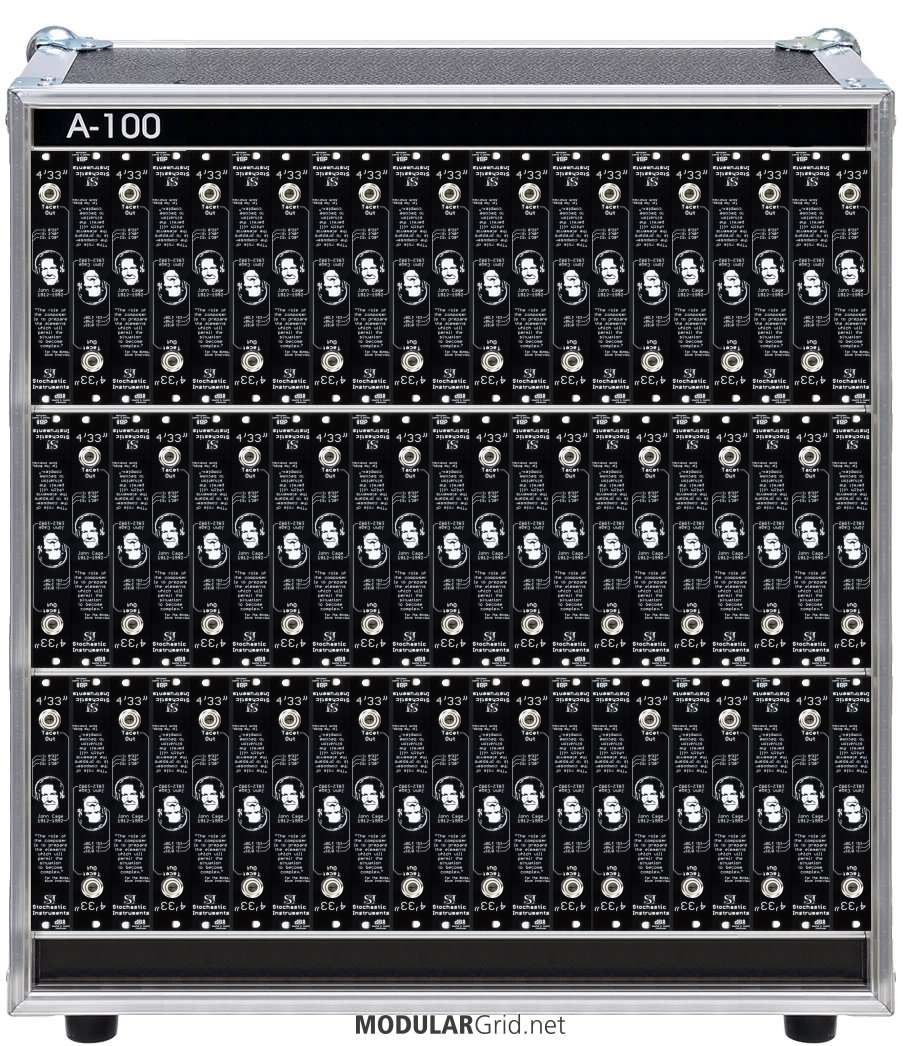
This is a nice one:
https://modulargrid.net/e/stochastic-instruments-4-33
"What can music be?"
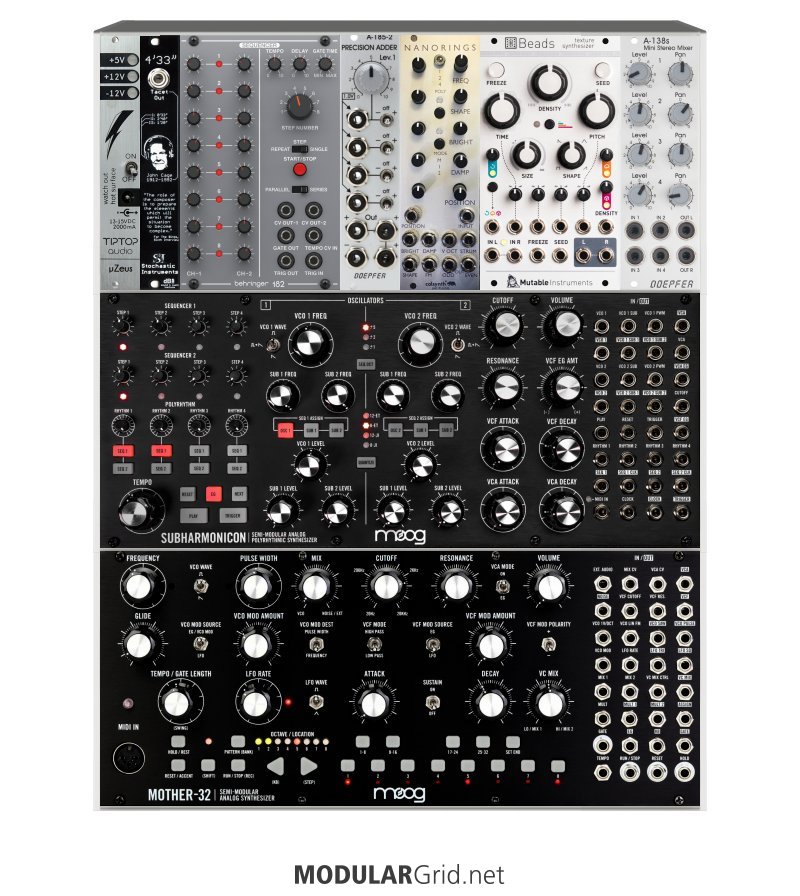
This is a little cleaner and cheaper too.
The Behringer seq does more, costs way less, and can act as another system clock.
The nanorings is smaller. works the same, and is easier to find.
Finding a Beads, or any authentic MI module, is tough now. Do you already have them?
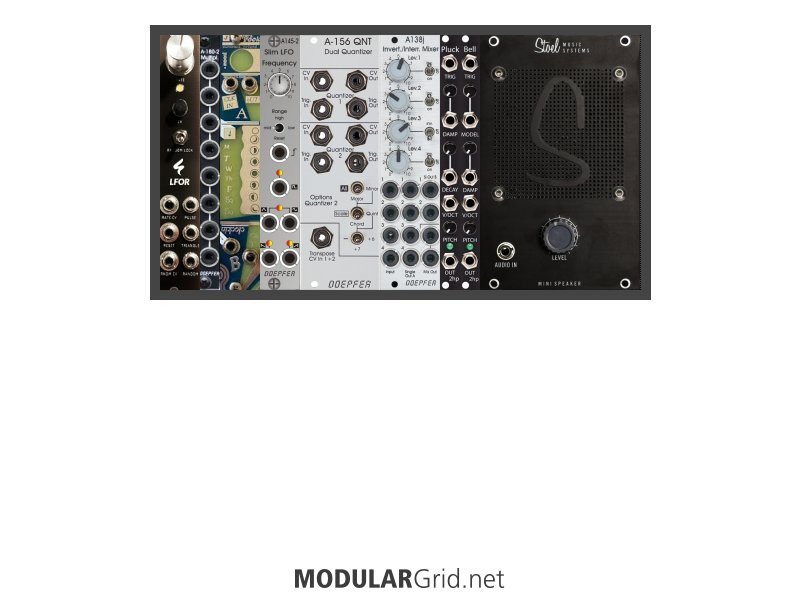
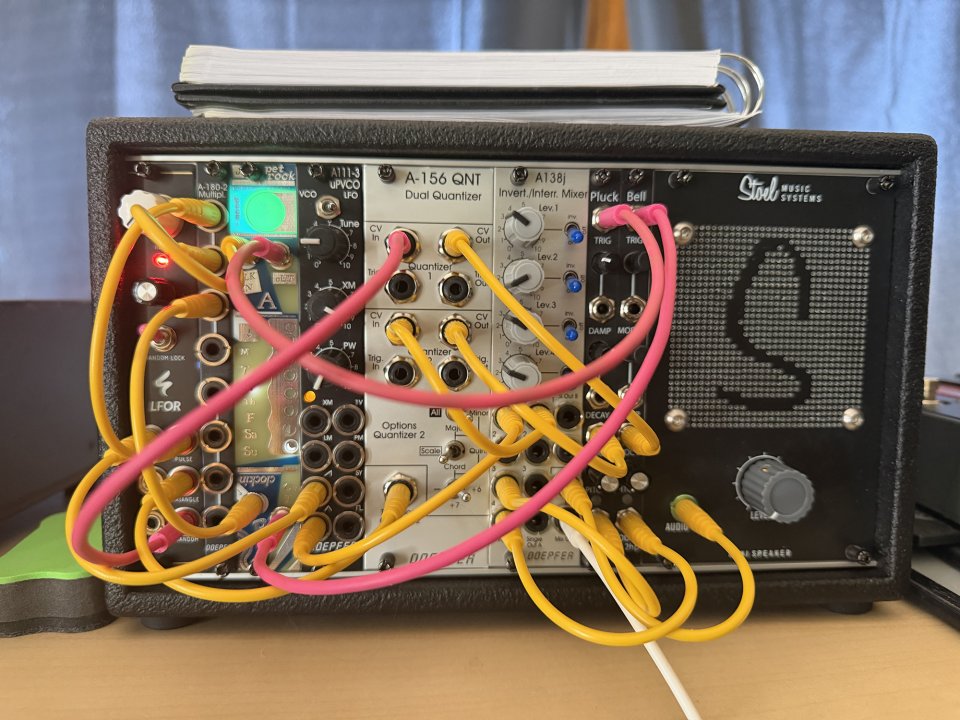
I put them in an order so they can often interconnect with those nice short yellow Doeper patch wires.
Love those little yellow Doepfer wires.
--

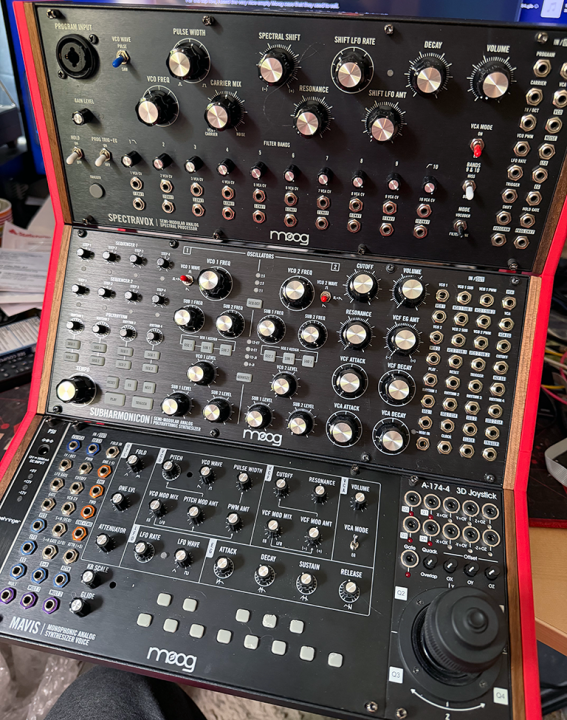
I built a three tier Moog like this. The red frame is from a guy on Etsy that 3D prints them and it wasn't expensive.
https://www.etsy.com/shop/Releas3DPrints?ref=shop-header-name&listing_id=1458591935&from_page=listing
Very sturdy and nicer than I had hoped. He prints them in colors other than red.
Really good work. Currently just $75. Can't beat that.
I kept the wood end cheeks but you don't have to. I thought they would end up lost in a drawer so I kept them on.
(To do that, I had to get 24 longer screws than what came with the frame.)

For the top row, I used the very nice empty Moog case that they used to sell.
They don't make them anymore, so you'll have to hunt around, but they're out there. A perfect match.
Unlike the other two, that empty case doesn't have it's own power so I used a Behringer PS,
running it all with one (big-enough) wall wart with a 3-way splitter wire to power the whole thing.
I did end up swapping rows 1 and 3 to keep the wires out of the way of those nice Subharmonicon knobs.
Worked way better on top. Here's how it ended up, as "The Squealer" (that really needs some mults).
For me, patch cable spaghetti never gets that bad.
I get lost on discovery road and forget what I'm doing, way before I run out of jacks and the wires to connect them :)
--
6hp left?
Doepfer A-185-2v Precision Adder.
You can then have one sequencer transpose the other, in tune, up or down,
and then share those new notes to that nice top row.
The power supply is fine.
The modular ribbon cable never carries audio. Just power and ground,
and sometimes, one gate for event on/off, and one cv, usually for notes.
Those two Moog sequencers are very different animals and can play nice together,
but the Subharmonicon is a demanding instrument to tame and integrate into a mix.
It's harmonic based, and always brings it's own special notes.
Spectravox is even weirder. For me, both of them are more for seasoning than a main course.
If you like that three-tier Moog format, consider maybe two Mother32s might take you further.
That'd be fun.
--
The purists don't care for Doepfer and Behringer that much, for differing reasons.
But I think this almost final build came out looking and sounding wonderful. Lots of melodic discovery to be had.
Clean and readable. One of those synths, that for me, are enjoyable to just look at, as well as play.

Here's the layout:
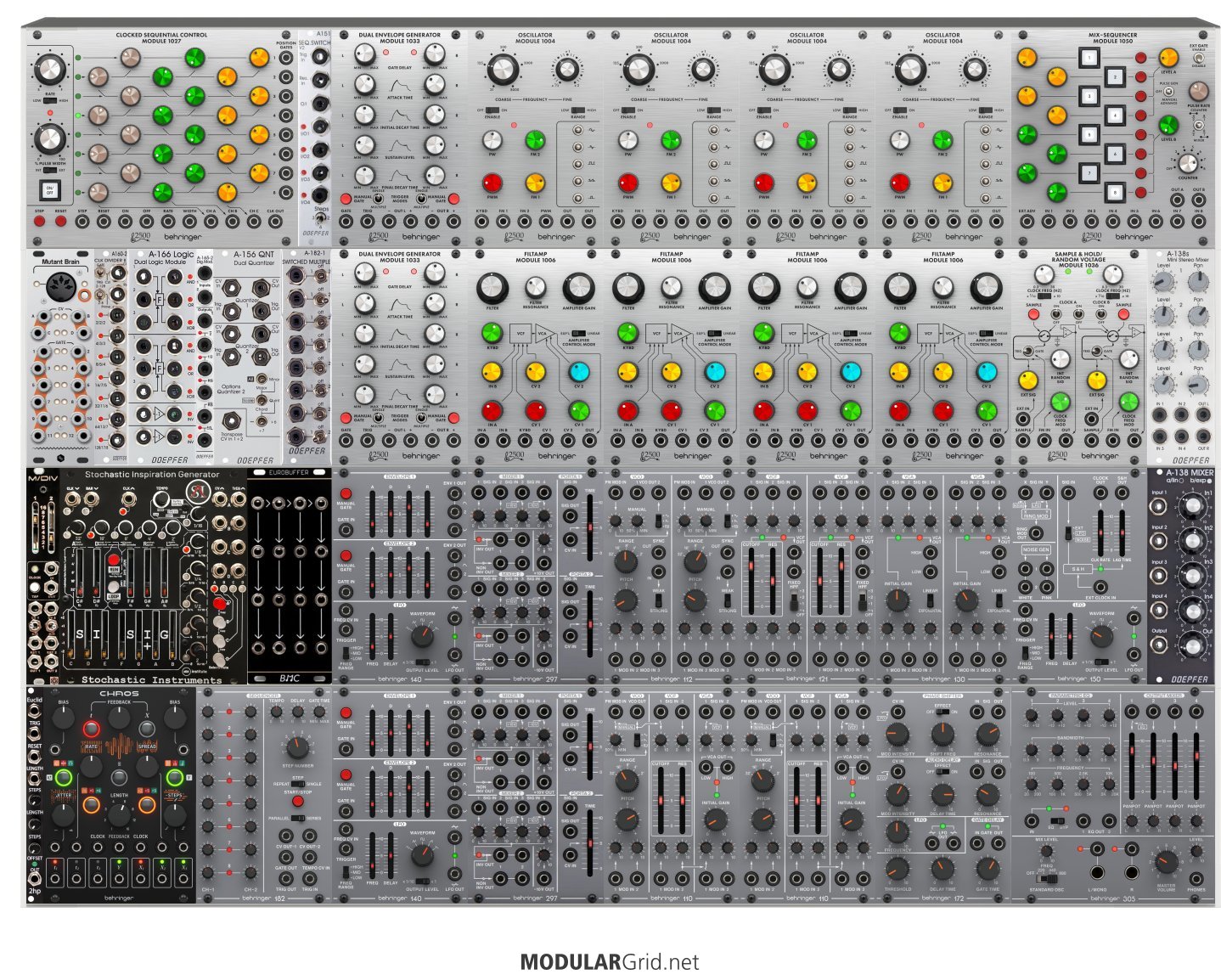
I tried to design more horizontally and vertically this time, a challenging constraint.
Vertically, 36 hp for event generation, 16 hp for envelopes, 64 hp for voicing, and 24 hp for mixing and output.
Horizontally, each row can also work as a separate synth, standalone from the others.
It is kind of delicate to transport, surprisingly heavy to move and really needs 8 more envelope generators.
I wish I could have shown it to my younger self that was reading the ARP catalog and 2600 manual obsessively in 1974.
My first synth was an EML 101 that I still have, and I see echoes of that here, and a hint of EMS Synthi 100 in there as well.
And long live Alan R. Pearlman.
--
"a tuning oscillator with 3 selectable frequencies (200/400/800 Hz)"
Well, there's your problem right there.
--
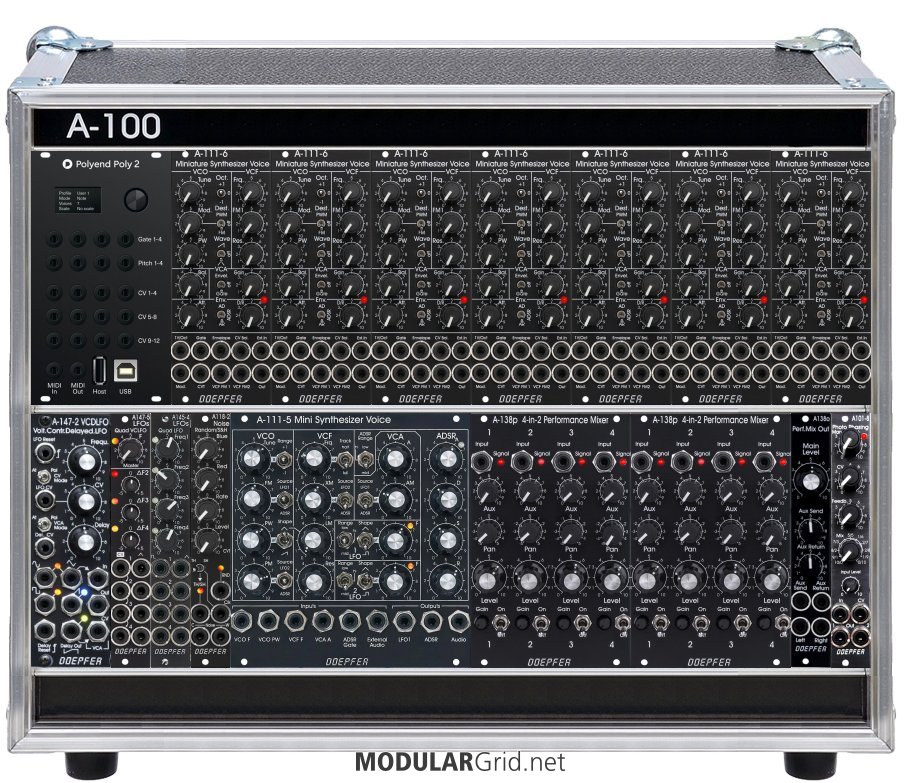
For the not-really-that-into-Doepfer players out there.
Clean and mean.
--
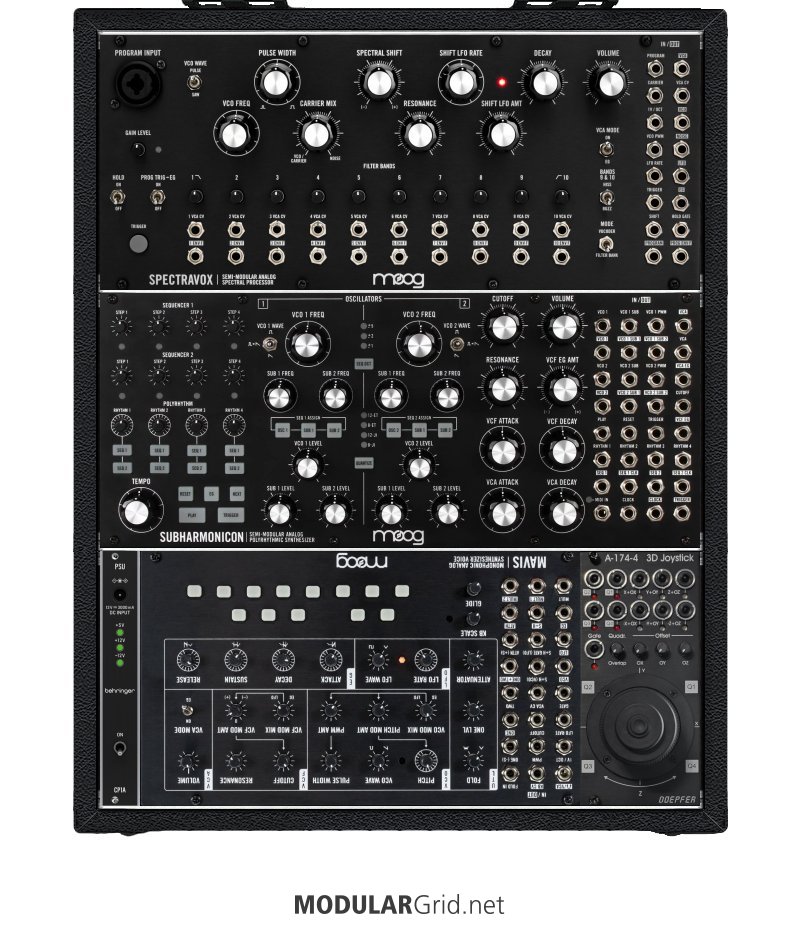
Why did Moog put Mavis' i/o on the left side, unlike all the other modules?
So I flipped the Mavis over to get everything on the right side.
This is kinda dumb, but not as bad as I thought.

--
As an exercise in Modular Grid, drop a quarter of those modules. (so that's 26hp to sacrifice)
Conceptualy split what's left into two, planning each half as a viable synth, whatever it does, on its own.
Now, with that newly freed space in the middle, fill it with utility and glue modules.
Adders, offset/attenuators, active multiples, submixers. Stuff like that.
--
The precision adder lets you switch multiple oscillators/modules up or down octaves without spreading oscillators out of tune with each other.
Flipping a switch to raise or drop an octave is a convenience compared to re-tuning with a knob, and more accurate than most active multiples.
You can also use it to transpose a sequence to another key with a second sequenced cv.
The first channel lets you ease in with an attenuator, so you can add a bit of wobble or other modulation fun to multiple voices.
Or you can use it to goose several modules a little bit into tune, all at the same time.
I guess it's value depends a bit on if you are going after playing notes 'in tune' with something else or itself.
I don't mean that negatively.
I know a lot of synth musicians don't want anything to do with that, and that's ok.
We forget after doing so much in digital, that analog is so squishy in its tuning.
The A-185's "precision" keeps combining or switching 1v/octave cv-s dead on. Really handy all the time.
--
Doepfer A-185-2v Precision Adder
Somewhere before the oscillators.
--
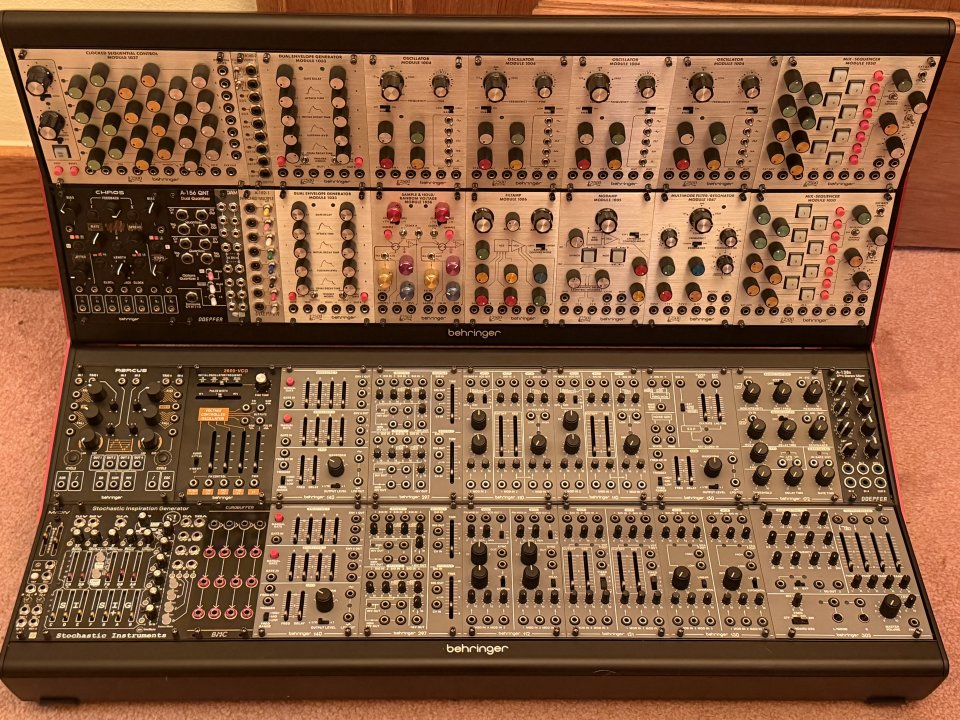
I’ve collected a bunch of Behringer modules over 4 or so years
and I wanted to get them off the shelf and give them a home.
I build mostly for auto-generation, I’ve added enough other parts to make it workable.
It sure used a lot of knurlies.
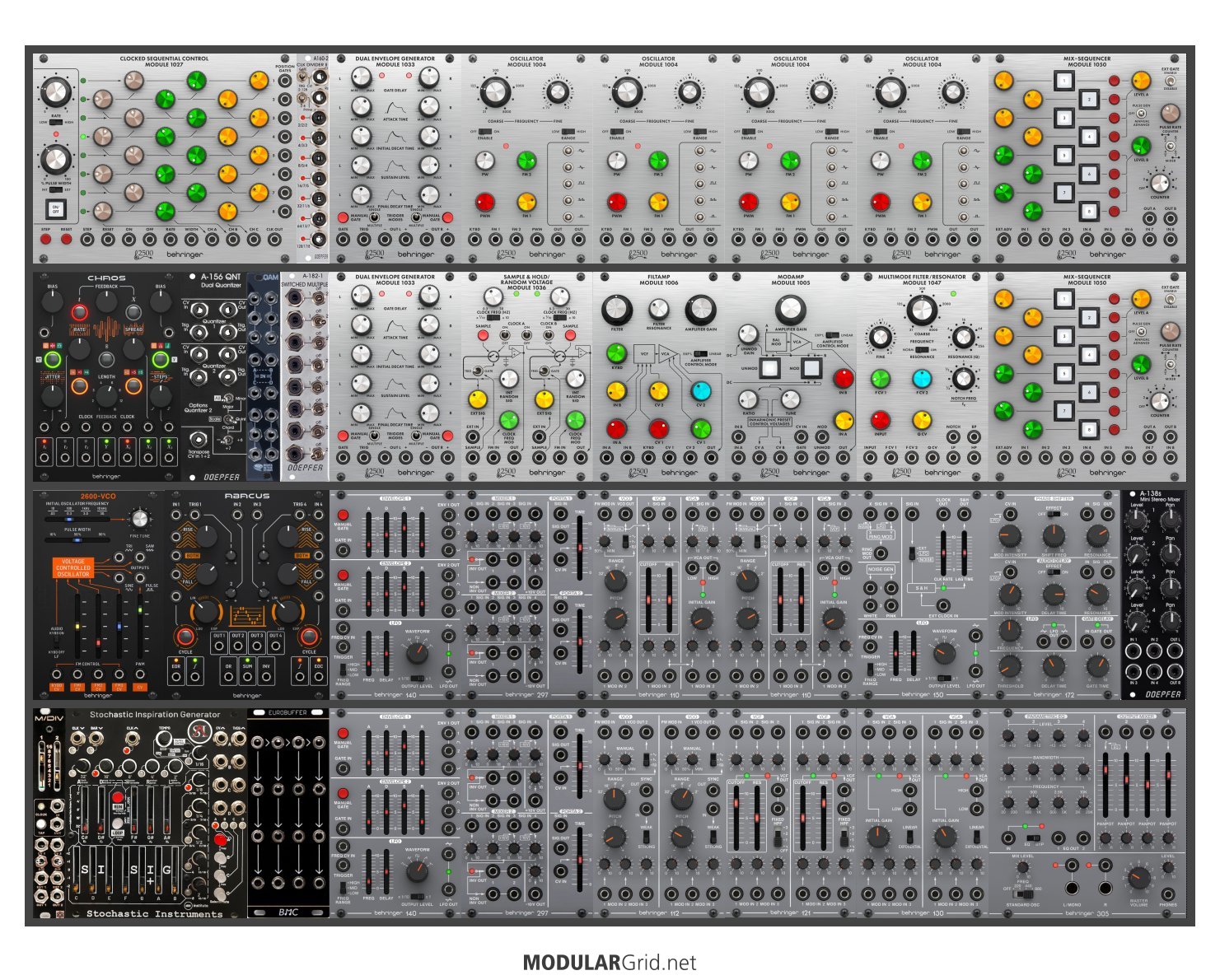
I tried to think vertically this time across all four rows and not be just two cases glued together.
Worked out to 36hp for note events, 16hp for envelopes, 32hp for voices, and 24hp for mixing.
Stereo! No fx modules! No midi!!
Two big wall wart power supplies! :(
It turned out very nice. I wish it was as big as it looks, but it's heavier than you would think.
Everything tests ok. I’ll try recording tomorrow.
—
--
All those signals and no way to easily share them.
You need some active multiples.
--
Pam's got 8 outs you can split and share with everything else.
A pair of Synthrotek MST buffered mults would take 8hp and gives lots of flexibility for all 8 outputs.
The ALM Axon-2 makes working with Pam's so much easier. Knobs and assignable buttons and 4 more inputs!
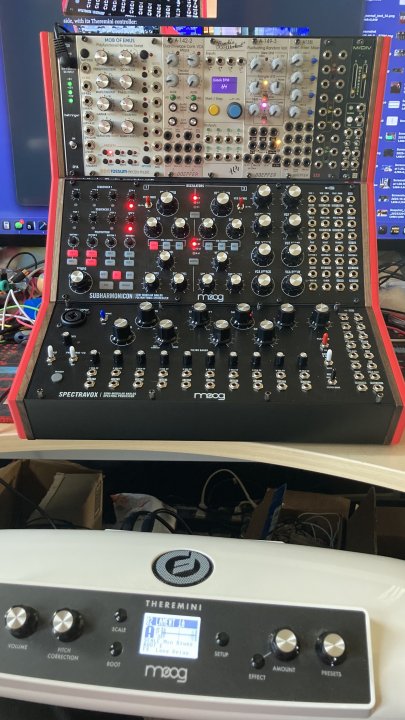
I did this last year with Pam's and Moog boxes, to learn about Krell patches.
--
https://modulargrid.net/e/stochastic-instruments-sig-4-track-stochastic-inspiration-generator
This can do exactly what you're looking for.
The SIG+ Stochastic Inspiration Generator is very live, well made, responsive, and accurate.
And fun. Lots of ghosts in that machine.
--
You just want to send the output of voice1 or voice2 to the looper, yes?
Is it ok if they're both 'active'? Is just routing the audio ok?
Routing cv and gate is harder.
With two Doepfer 182-2's, you need two cv/gate pairs, the trigger for each, and reset for each to sync them.
At least 8 wires vs. 2 wires if it's just audio. Plus 2x 4hp in the rack.
There are advantages though to routing cv/gate. Both voices can interplay,
and you can have long sustains without cutoffs or clicks when you switch, but it gets complicated quickly.
Look at the Doepfer A-133-2 Dual Voltage Controlled VCA/Polarizer/Inverter or the cheaper A-130-2 dual VCA.
It'll sound better.
--
Did you want to sync the sequencer with midi in?
You'll need a midi in that supports it and the v/oct and trigger from midi.
Do you need two note and trigger outs from midi, or just one set?
Do you need this box to be able to send midi out too?
This arrangement could make things easier.
Input and signal generation on the left. A multiple between to share those signals. Voices to your output on the right.
I moved the power supply to be better out of the way of patch cables.
The 110 needs those two envelopes, so I kept it nearby.
The 2600 vco doesn't have a vca, but you could put it into the 110's 2nd vcf input.
The 121 filter at the end lets you tame and shape your final output,
but also gets you a 3 x 2 mixer to combine your audio generators,
or blend the 2600 vco's vaveforms.
I kept the CU1A output, but it's kind of terrible.
You have to power it from the USB-C input, it's not hooked to the power supply.
So with no usb input power, there's no output audio and no headphones.
Just a dumb design. Nothing but trouble.
(and the 921A Oscillator Driver isn't applicable here)
I added the 903A random because there was a 4hp hole,
and it's cheap, and you don't have any random noise fun.
If you want the sequencer to track midi in, you'll need an interface that supports midi clock/sync out.
There's loys of them available.
--
You would need two EGs that trigger on end of envelope, and your A-141-2 VCADSR / VCLFO does that, but only does one. You would need a quad polarizing mixer like the A-138J to blend the functions, but I didn't spot that here. And then I guess something else to mix and invert the outputs.
But it's good because if you drop the A-141-2, you only have find 6hp more to sacrifice to fit a 20hp Maths.
Oh, you wanted to get rid of some modules? We don't do that here. We only get more modules and larger cases.
--
An impressive build, but what we'd really like to see is your giant collection of patchcords!
--
Space FX is basic, but if you already own it, have the hp, and it adds some no-fuss air to the mix, why not?
On the other hand, if I actually tried one, I might not say that.
--
Nothing wrong with running their modules
(though I've avoided getting a space fx, and have those "four" functions covered.).
I've used the Chaos Marbles clone often, way more than the Abacus. I'll never understand the popularity of Maths.
The 1050 mix sequencer would work great here as your output mixer or for getting a 24 note sequence from the 1027,
or just for switching signals. There's also the cable in the back to send the 1027's clock to the 1050, and a switch for it.
The behringer arp and roland clones are on discount now, I suspect that line will be discontinued soon.
I know there's a ton of them out there for the used market, but get 'em new while you can.
You could benefit from a good mult to share your hard-won generated signals.
I like the Synthrotek MST '07 Buffered Multiple @ 4HP. Best $99 you could spend here.
I think you can get lots out of what you've shown here already.
I've moved things around, mostly to help with using those little short yellow Doepfer patch cables.
--
$2,300 is a lot for a one drum/one oscillator/one filter system.
--