RhPf Electronics - Twin Peaks Eiger-Mönch
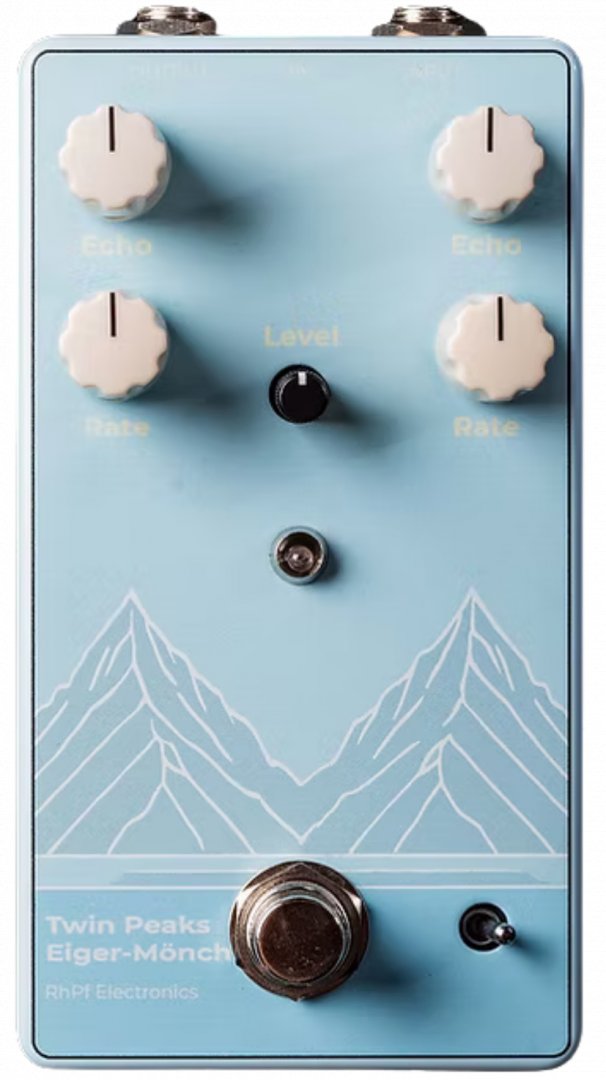
- Dimensions
- 70 mm wide
- 125 mm high
- Current Draw
- 70 mA / 9 V DC / Negative Center
- Price
- $179
This Pedal is currently available.
MG ID: 56889
Dual Cascading Delay
The Twin Peaks Eiger–Mönch is built around the idea that delay can be more than repetition. It treats echoes as moving voices that interact with each other and with the player, shaping rhythm and space as part of the performance rather than sitting behind it. Instead of relying on presets, subdivisions, or programmed patterns, it places two independently voiced delay lines under direct control, letting timing, feedback, and interaction define the result.
Each line carries its own character. One is tuned for warmth and body, softening the attack and filling the low mids so long repeats feel rounded and grounded. The other is voiced for clarity and articulation, keeping transients sharp and helping rhythmic parts stay present in dense arrangements. Because both lines respond differently to picking dynamics, chords and single notes develop distinct trails that feel connected to how the part is played rather than imposed after the fact.
When the two delays run side by side, their contrast creates width and separation that adds depth even in mono setups. The warmer voice provides weight and sustain while the brighter voice outlines timing and articulation, making layered parts feel spacious without blurring the original signal. This behavior suits anything from subtle ambience that stays out of the way to defined rhythmic echoes that support groove-based playing.
When the routing is switched so the delays feed into each other, the behavior shifts from layering to motion. Each pass through the loop slightly reshapes both timing and tone, creating repeating patterns that drift, accelerate, and slowly dissolve into softer textures. Instead of static subdivisions, the echoes feel conversational, as if two instruments are answering each other while fading into the background. This makes the pedal equally suited for cinematic soundscapes, evolving intros, and rhythm parts that need movement without becoming cluttered.
Control remains immediate and continuous. Each delay line has its own rate and feedback range, allowing complementary tempos and repeat densities to be shaped by ear rather than by numeric divisions. The feedback is calibrated to remain musical across the entire sweep, supporting long, expressive trails while staying stable and predictable in performance settings. A high-headroom mixing stage keeps the dry signal intact while allowing the repeats to sit naturally within the sound rather than on top of it.
What defines the Eiger–Mönch is not a single feature, but the way its two voices interact. The contrast between warmth and clarity, combined with true cascading behavior when selected, turns delay into a source of phrasing, rhythm, and evolving texture. It is designed for players who want their time-based effects to feel connected to touch and timing, whether used subtly as part of the core tone or more prominently as a compositional element.
Designed and manufactured in Switzerland by RhPf Electronics, the Twin Peaks Eiger–Mönch reflects an approach focused on original circuit development, controlled interaction, and musical behavior across all settings. It is built to integrate into professional rigs where reliability, consistency, and expressive response matter as much as sonic character.
Marketplace sell and buy used pedals
1 Users are observing this
Right Now on eBay